
Wolfsburg meets Guangzhou: what Volkswagen’s China pivot teaches every global brand
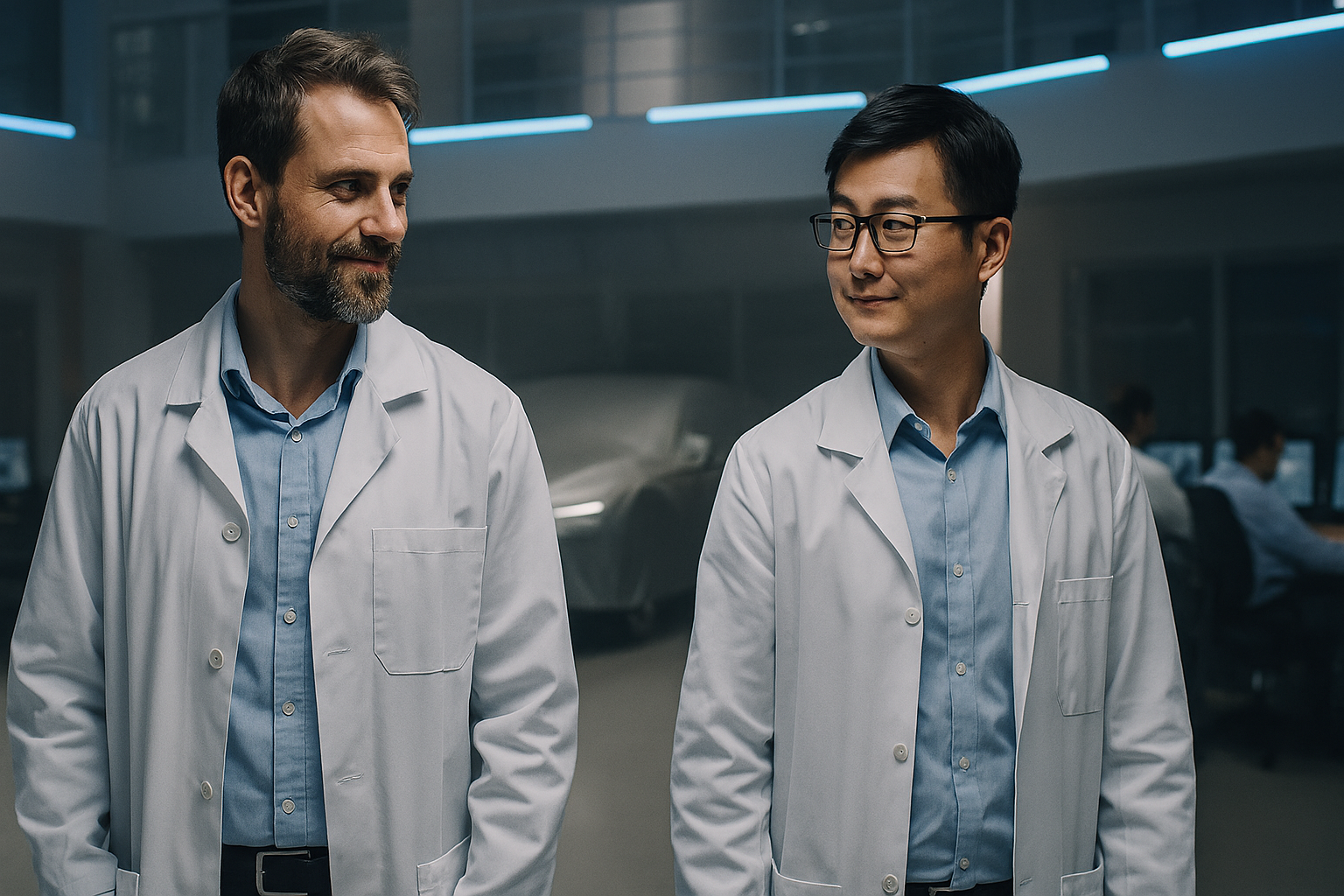
Volkswagen is charging ahead with a more determined intercultural plan in China. Will it work?
Volkswagen’s recent struggles in China aren’t just an auto-industry headline. They’re a useful study in intercultural agility for any legacy brand operating across borders. The lesson is straightforward: reliance on brand equity and historical technical expertise alone won’t win fast-moving local markets. Success now requires cultural connection, faster feedback loops, and people-level integration.
The gap: engineering excellence vs. local expectations
Volkswagen still carries the weight and credibility of German engineering — torque, chassis dynamics, build quality. But Chinese EV customers, especially younger buyers, have different purchase triggers: richly integrated digital experiences, highly localised infotainment, and expressive design that feels personal rather than austere. The ID series, for many buyers, felt designed for Düsseldorf, not Dongguan.
Key frictions:
- Product fit: minimalist Bauhaus interiors read as “cold” to buyers who want customization and conspicuous tech, something which was not at the leading edge as expected.
- Feature priorities: voice assistants, seamless mobile integration, and WeChat-first UX matter as much as range and stiffness. Consumers want something to use for productivity and entertainment while sitting in China’s huge traffic jams
- Pace: China’s EV ecosystem evolves at breakneck speed compared with typical European product cycles. The crux of this lies in differing views towards work culture and work-life balance.
Where culture meets process: people-to-people integration
Technical partnerships are necessary but insufficient. Volkswagen’s strategic moves in 2024, co-developing platforms with local players and building a fast-charging network, are important. Equally crucial was the organisational response: forming joint engineering teams, opening an in-country R&D hub, and appointing bilingual project leads. Building the people connection is as important as the electrical connections.
The deeper adjustments were behavioural and procedural:
- Hybrid workflows that combine rapid prototyping with German milestone checkpoints. Here, the rapid, top-down Chinese workstyle beat the German style on procedural rigor. Compromises were made to speed up the work processes on the German side by squeezing out unnecessary feedback loops. However, certain milestone checkpoints were kept in order to assure quality and consistency of product.
- Time-zone and schedule sensitivity to reconcile differing expectations about work hours and responsiveness. The six hour time zone difference to Germany (seven in daylight savings time) made for little overlap between engineering centers. Hours were adjusted to maximize overlap while also caring for the rigorous work-life balance of Europeans.
- Intercultural mediators who translate not only language but intent and tone. “Lost in translation” is not just a vague term. It has major implications for fast-moving development teams. Installing bilingual intercultural mediators would lessen the opportunities for losing things in translation.
These changes recognise a simple truth: if teams can’t synchronise culturally, they can’t synchronise technically. And that is the difference between a successful product and one which won’t sell.
The heartbeat of the problem: different working rhythms
Practical examples show how cultural rhythms translate into daily friction:
- Workstyle: the 996 pace (long hours, rapid sprints) contrasts with German norms that protect work-life boundaries and insist on deliberation. Who hasn’t heard of the 35-hour workweek concept? These two seem in direct conflict with each other, especially with time zone differences and the urgency of bringing product to market. Enforcement of work hours in Germany can be strict, with fines issues to companies whose employees work overtime but without approval or compensation.
- Decision-making: hierarchical, top-down rapid decisions versus consensus-driven, documentation-heavy processes. In China, the senior leader in a functional area takes a decision and everyone follows, often with no questions asked. I worked in a similar environment in VinFast in Vietnam where orders came from the top. In contrast, the German culture relies on consensus decision-making with various layers of Gremien (committees) in larger organizations. Naturally, these committee meetings take time.
- Communication: indirect, harmony-preserving feedback versus direct, sometimes blunt precision. Depending on the culture of the reader, German engineers can seem quite blunt and direct in their language. They will speak truthfully and openly, even up the chain of command. Asian communication is more nuanced. What is not said can be as important as what is said out loud, as the context around the spoken word is very important. This can feel like “beating around the bush” to the more direct German members of the team.
To be clear, none of these are “right” or “wrong.” They are cultural signatures that must be actively bridged when multi-national teams collaborate under market urgency. Getting these right can lead to success. Getting them wrong, well…
Early results and the real metric: faster learning cycles
Has the pivot worked? Partially, but it is still early as VW reworks its product portfolio. VW’s EV share in China remains modest, but partnerships and localised R&D have shaved months off development cycles and produced prototypes that align more clearly with Chinese preferences: sleeker aesthetics, smarter UX, and more competitive pricing. The tangible win here is speed-to-learning , with shortening cycles so the product adapts while the market keeps shifting.
Strategic takeaways for leaders
- Treat cultural adaptation as a strategic capability, not an HR checkbox. This is a critical success factor. Invest in bilingual mediators, local hubs, and cross-cultural training tied directly to product milestones. But don’t just implement these on the remote end. Employees in the home office need to receive similar training and support in order to be successful in collaborating with their overseas counterparts.
- Rebalance process design: understand the decision-making dynamic in the culture you are working with. Create adaptations between the headquarters and local office. In Volkswagen’s case, mixing agile sprints for rapid iteration with deliberate milestones to protect quality and regulatory compliance, is an important success factor.
- Listen before you scale: local user research and co-design with in-market partners reveal priorities that global design reviews can miss. Don’t enter that new market with the “our way or the highway” attitude, because that is sure to result in a breakdown before reaching the on-ramp.
- Design collaboration rhythms: if working across time zones, create overlapping “golden hours” for real-time work, and formal windows for deliberation so neither side feels steamrolled. Respect and understanding for work-life balance, according to each culture is important for the mental health of staff.
Conclusion
Volkswagen’s China story is still unfolding, but its shift from “home market-designed” product thinking to genuine in-country co-creation is instructive. In a market that can reconfigure preferences in months, legacy brands must do two things at once — keep engineering rigor and accelerate cultural integration. The loudest obstacle in the room is sometimes not a technical constraint but a cultural mismatch. Learn to listen, adapt your rhythms, and build products with the people who will buy them.