
From Dumplings to Product Strategy: How Alexandra Strassburger’s Lived Experience in China Shaped Mercedes-Benz Innovation
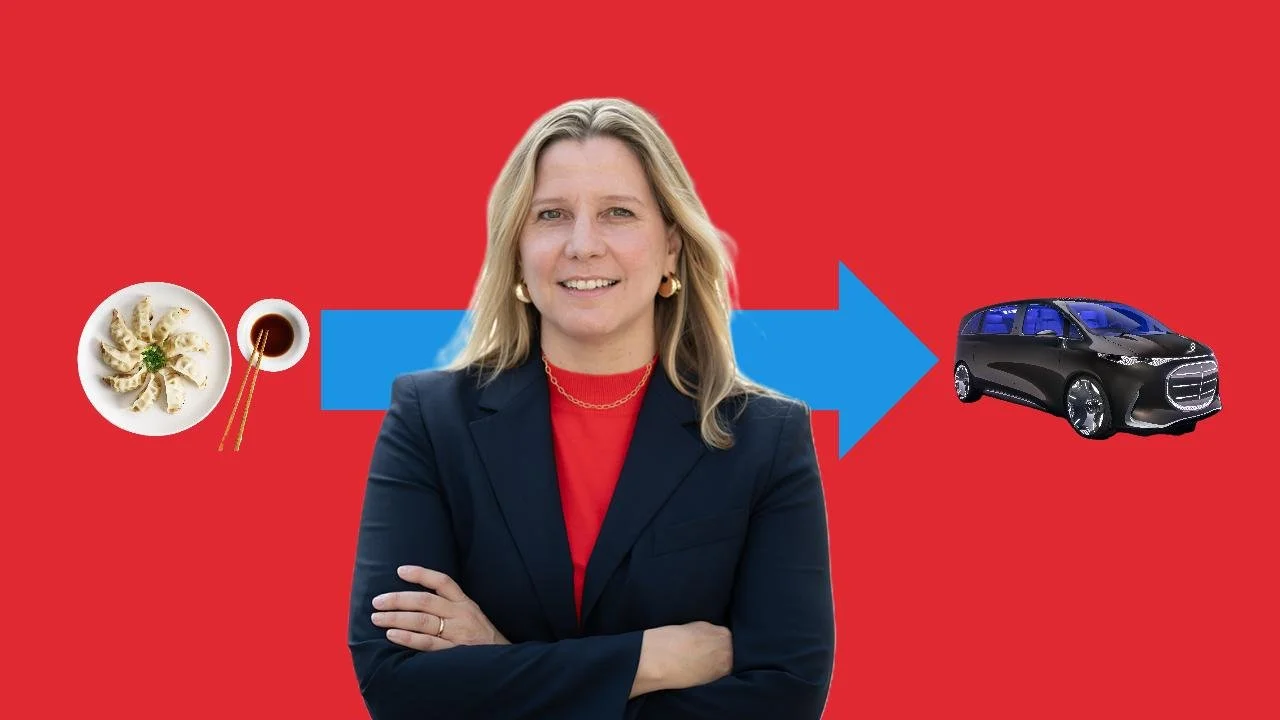
Alexandra Strassburger developed a direct link between local culture and Mercedes-Benz future vehicle strategy.
When Alexandra Strassburger moved to China at age 27, she wasn’t just embarking on a new professional chapter, she was stepping into a cultural immersion that would redefine her leadership, her family life, and her contributions to Mercedes-Benz R&D. Over the course of 11 years, Alexandra didn’t just adapt to China; she became part of it. “If you ask me where my home is,” she reflects, “it’s in Chaoyang, Beilu in Beijing.”
As Head of IT for Global Sales and Marketing at Mercedes-Benz Cars, Alexandra now leads international teams from Stuttgart. But her formative years in China, where she helped establish product management and built the China Insights division, continue to inform her approach to strategy, innovation, and intercultural fluency. Her story is a compelling example of how personal integration can yield professional transformation.
Alexandra’s connection to China began early. Her father hosted Chinese business delegations at their home in Germany, exposing her to cross-cultural exchange from the age of five. Later, Mercedes-Benz offered her a six-month internship in China during her studies, and she was “hooked.” When the opportunity arose to relocate permanently, she and her husband made the leap, although he stayed behind initially, then joined her in South China, where both worked for Mercedes-Benz.
Their family life in Beijing was anything but conventional. Alexandra and her husband chose not to enroll their children in the German school system, instead opting for local Chinese education and full cultural immersion. A Mandarin-speaking nanny, traditional Chinese medicine, and weekend mahjong games became part of their daily rhythm. “We didn’t just live in China, we lived as part of China,” she says. Their annual Chinese New Year celebrations, complete with dumplings and tea ceremonies, are now a beloved tradition among friends back in Germany.
Professionally, Alexandra’s early days in Beijing were challenging. “I was very German and very controlling,” she admits. Her leadership style, with task lists, meeting minutes, rigid expectations, didn’t resonate with her new team. Many of her colleagues had studied English but had no automotive background. “I had to drop my expectations around qualifications and open my heart to growing together,” she explains. That shift marked a turning point in her leadership journey.
Over time, Alexandra developed a hybrid approach that blended German thoroughness with Chinese pragmatism. “That was the magic key,” she says. She learned to value flexibility, solution-oriented thinking, and the importance of building trust through personal relationships. In contrast to the formal boundaries typical in German workplaces, her Chinese colleagues embraced closeness. “I know their families. They know mine. When my first son was born in Beijing, my team were the first to meet him.”
This personal closeness extended into her professional initiatives. In Fuzhou, Alexandra founded a cooking club that became a surprising source of insight for vehicle development. Through shared meals and cultural exchange, she gained a deeper understanding of Chinese consumer behavior, insights that later informed strategic decisions at Mercedes-Benz. “It sounds funny,” she says, “but the whole automotive insights and strategy is based on a Chinese cooking club.”
Her return to Germany after more than a decade abroad was smoother than expected. “We came back not as a newlywed couple, but as a family of four,” she notes. Germany had changed, becoming more international and diverse, and Alexandra brought back a leadership style rooted in empathy, openness, and cultural fluency. She continues to integrate Chinese traditions into her daily life, ensuring her children maintain their language skills and cultural identity.
Alexandra’s story challenges the notion that professional success abroad requires compartmentalization. Instead, she shows how personal integration, language, relationships, rituals, can enrich leadership and drive innovation. Her journey is a testament to the power of lived experience in shaping not just who we are, but how we lead.
For global professionals navigating cross-cultural environments, Alexandra offers a model of humility, adaptability, and strategic insight. Her advice? “Don’t try to replicate your home culture. Immerse yourself. Learn from the people around you. That’s where the real transformation begins.”